The right amount, repeatedly.
Too much or too little food is the problem we aim to address. Repeatable portions are a design goal that still needs measurement.
 BOBERLIROBOTICS & ENGINEERING
Let's talk
BOBERLIROBOTICS & ENGINEERING
Let's talk
BOBERLI / FIRST PRODUCT IN DEVELOPMENT
Meet AutoFishFeeder. An automatic aquarium feeding system being developed to make controlled, repeatable feeding part of everyday fish care.
Mechanical prototype development · Physical testing open
Founder-led. Self-funded. Built step by step.
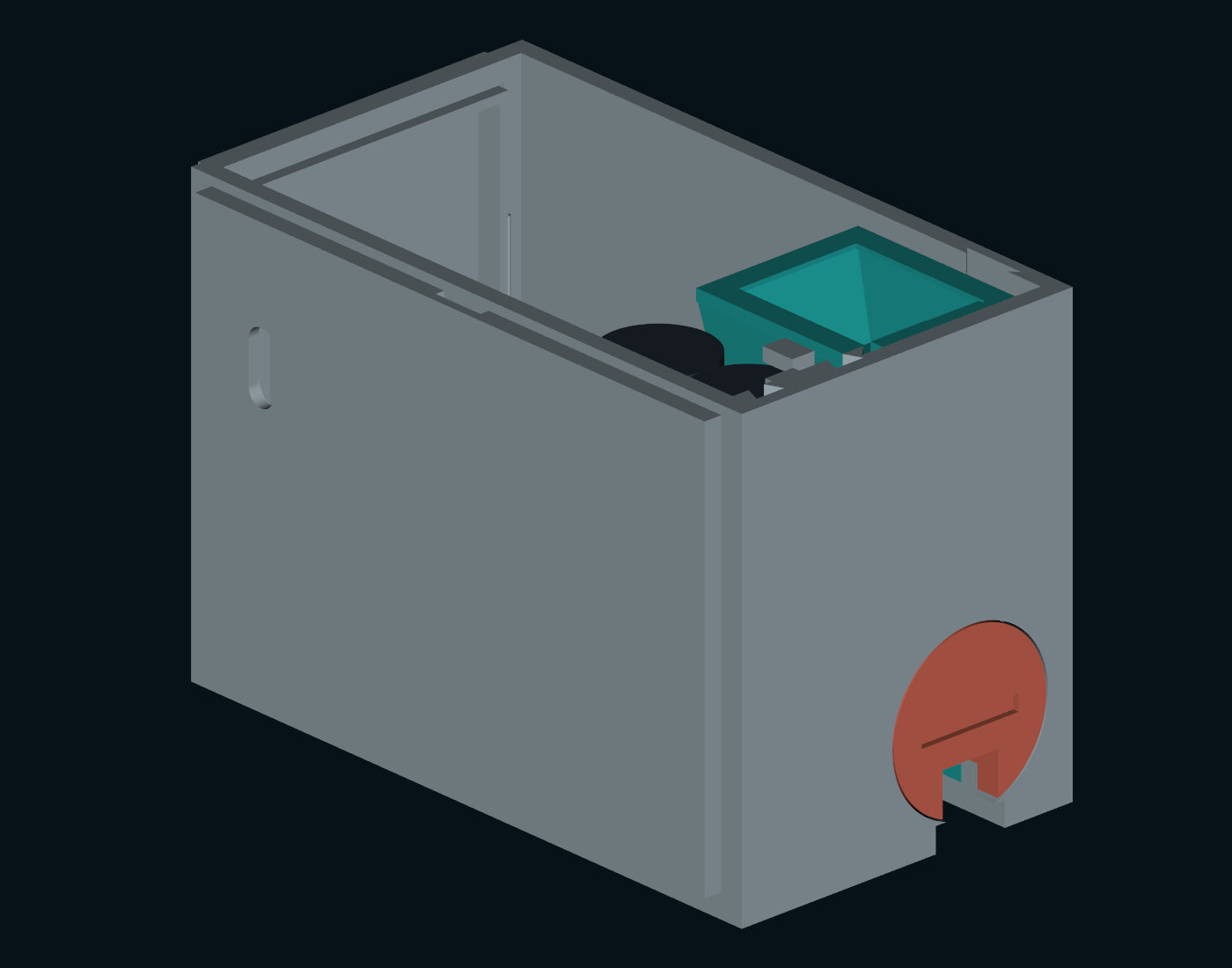
Controlled portions
Serviceable architecture
Evidence before scale
01 / THE EVERYDAY CHALLENGE
Aquarium care needs consistency. AutoFishFeeder explores how a serviceable mechanism could make feeding easier to manage, especially when a keeper is away.
Too much or too little food is the problem we aim to address. Repeatable portions are a design goal that still needs measurement.
Travel and busy days motivate scheduled feeding. Reliable unattended operation remains a future test objective.
Feed shape, size and moisture may affect transport and dispensing. Maintenance access matters when something needs attention.
These are product hypotheses to test with aquarium keepers, not findings from a completed customer study.
02 / THE APPROACH
A hopper, a removable cartridge and a motor-driven transport mechanism form the mechanical core. Electronic control is the next integration step.
The hopper holds feed above the transport mechanism.
A motor drives an auger inside the cartridge to move feed.
The outlet provides the intended path into the aquarium.
Control will coordinate motor timing and operating limits.
Feed moves through steps 01–03. Electronic control will govern the mechanism; it is not another stage in the food path.
03 / INSIDE THE DEVELOPMENT
These views come from the current mechanical development model. Colours distinguish components; they do not specify final materials or a finished product.
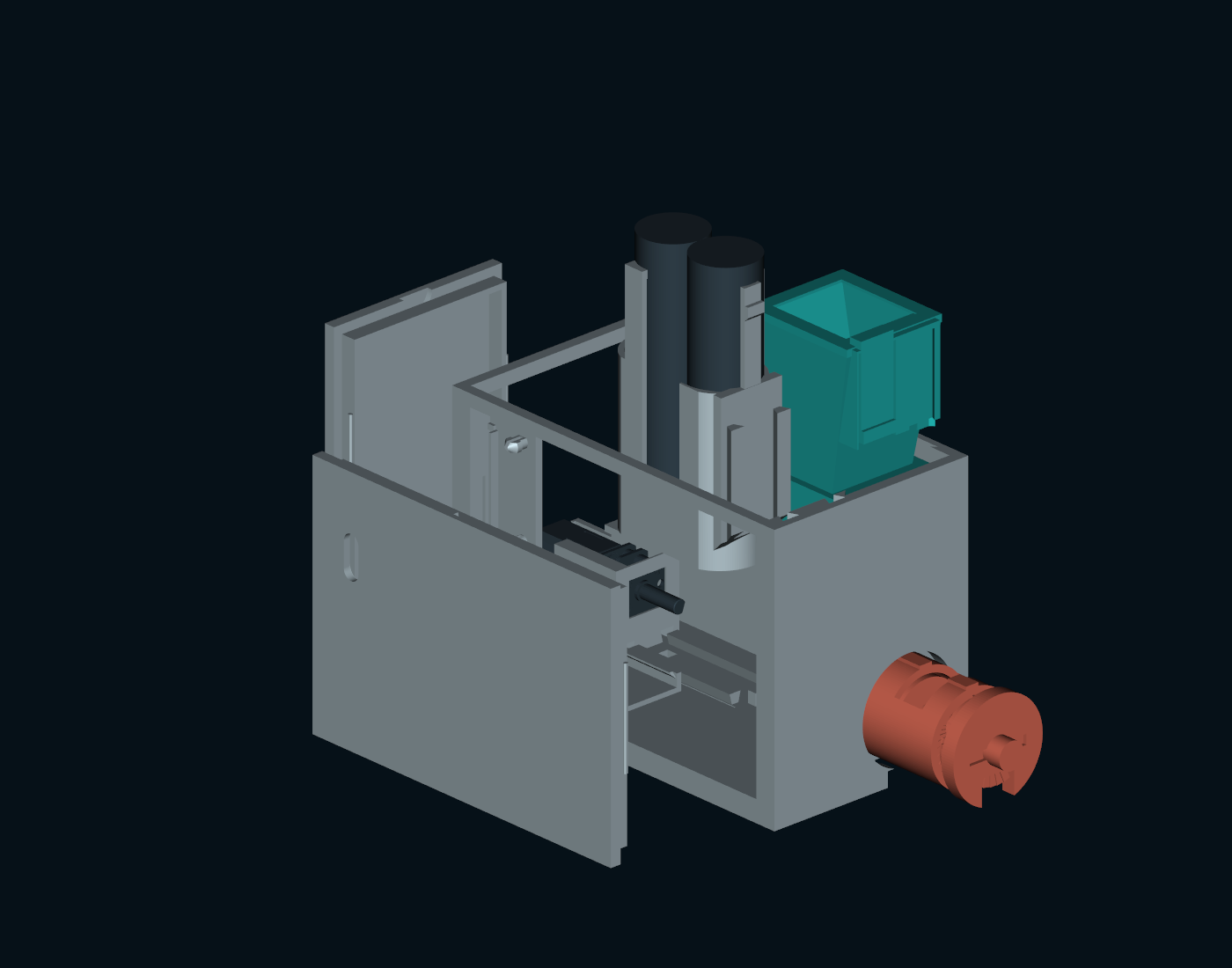
CAD illustration · Components separated for clarity. Exploded offsets do not establish collision-free assembly or verified service access. Electronics references omitted.
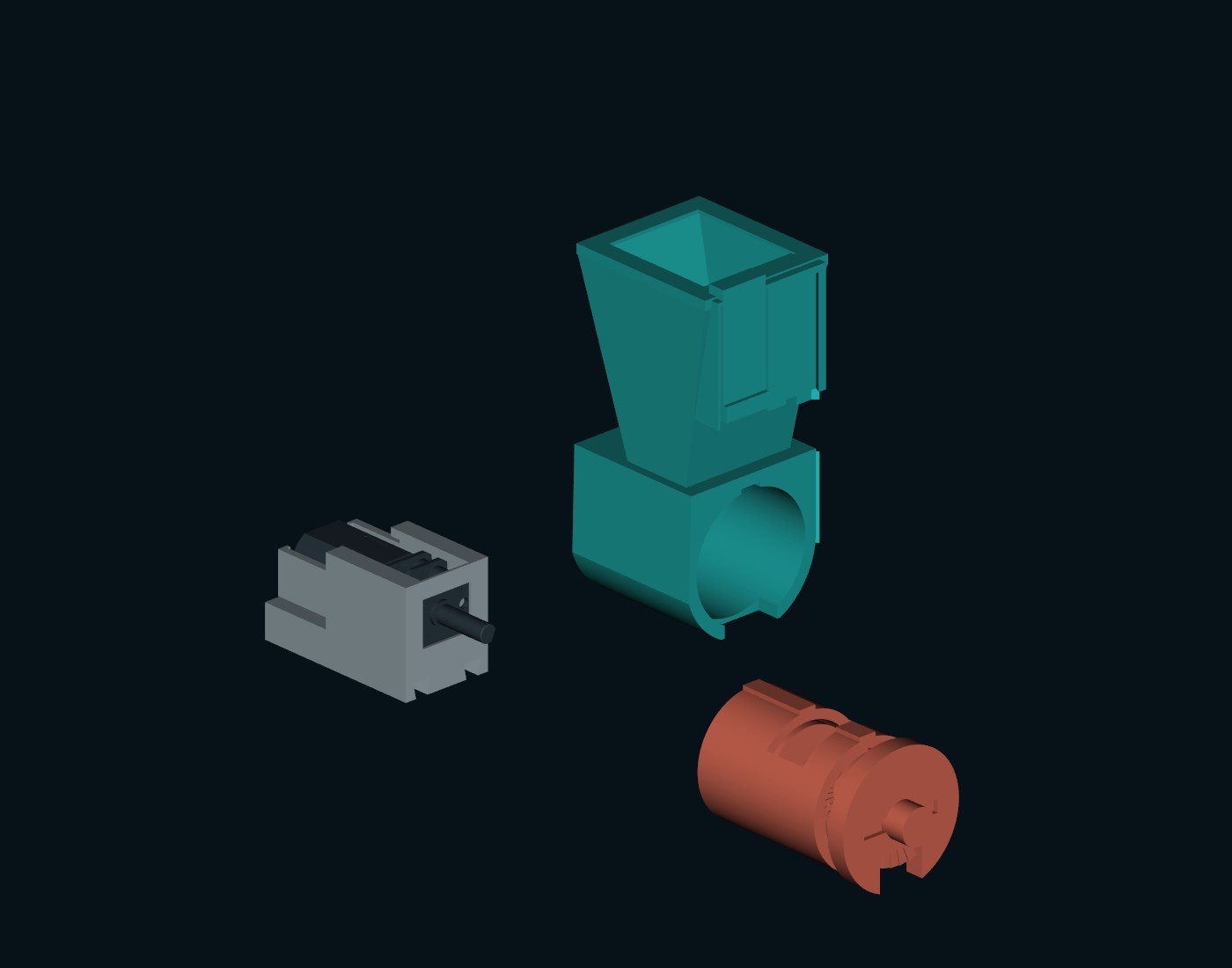
CAD illustration · Hopper, cartridge and auger. Portion size, flow and jam behaviour await physical tests.
[DOĞRULANACAK: güncel revizyonu gösteren, paylaşımı onaylı fiziksel prototip fotoğrafı]
04 / WHERE THE PROJECT STANDS
Mechanical design and prototype iterations are documented. Product-level feeding reliability has not yet been demonstrated.
Development snapshot · September 2026
Editable CAD sources and successive interface revisions.
Component exports and focused test coupons prepared. A motor-latch printability issue remains open.
Earlier fit observations informed revisions. Current battery and motor locks still need coupon tests.
Portion consistency, jamming and cycle life need measured tests.
A computer-based control reference exists. Integration and verification on feeder hardware remain open.
05 / THE DEVELOPMENT METHOD
The project's strengths are in how it is being developed. Reliability remains an outcome to earn through testing.
Parametric geometry and recorded revisions make design changes easier to inspect and compare.
Removable modules put assembly and maintenance into the design process. Actual fit and access still need verification.
Focused FDM coupons help investigate a joint before committing to another full enclosure print.
WHO IT IS BEING BUILT FOR
Market validation is planned.
The initial focus is home aquarium owners, frequent travellers and people maintaining several tanks. Aquarium stores, small breeders and maintenance businesses are possible future pilot partners.
06 / WHAT COMES NEXT
Progress depends on what each test reveals. These are development stages, with no announced launch date.
Measure fit, retention and service access; resolve open printability issues.
Test feed flow and portion repeatability with defined feed samples.
Connect motor operation, timing and bounded control behaviour.
Investigate wear, jams and reliability over sustained operation.
Trial suitable prototypes in representative aquarium routines.
Assess manufacturing and incorporation as product and market evidence develops.

BOBERLI / ROBOTICS & ENGINEERING
Engineering Tomorrow's Robotics Today
07 / BEHIND THE PROJECT
Boberli is a bootstrapped, founder-led engineering venture currently developing AutoFishFeeder.
It is in the pre-incorporation stage, with resources focused on prototyping and reducing technical uncertainty. Incorporation will be considered as product and market evidence strengthens.
Boberli's broader interests connect robotics, automation and practical engineering. These are future directions, not completed projects or services currently delivered.
FOUNDER
Founder · Environmental Engineer
With a background in environmental engineering, Hakkı is developing AutoFishFeeder through hands-on design and prototype iteration. He leads the project and remains responsible for engineering decisions.

AI-assisted engineering workflows support research, documentation, design iteration and software development. Engineering decisions and product responsibility remain with the founder.
08 / BUILD THE NEXT STEP
Open to technical and commercial mentorship, prototype support, manufacturing conversations, future pilot users, startup programmes and suitable early-stage funding.